IN THIS ARTICLE
Travel can reveal how we behave when plans change, space is limited and other people need patience. Islamic teachings place remembrance of Allah alongside care for family and good conduct. Here is a sourced, practical way to carry those values into an airport, train station or pilgrimage journey.
Some habits shared online as “the Sunnah of travel” are well sourced; others are customs or scholarly recommendations with different evidential strength. This overview focuses on the principles that are safe to apply and points to primary references for the supplications it mentions. It is not a fatwa or a complete fiqh guide.
Begin with remembrance and a good intention
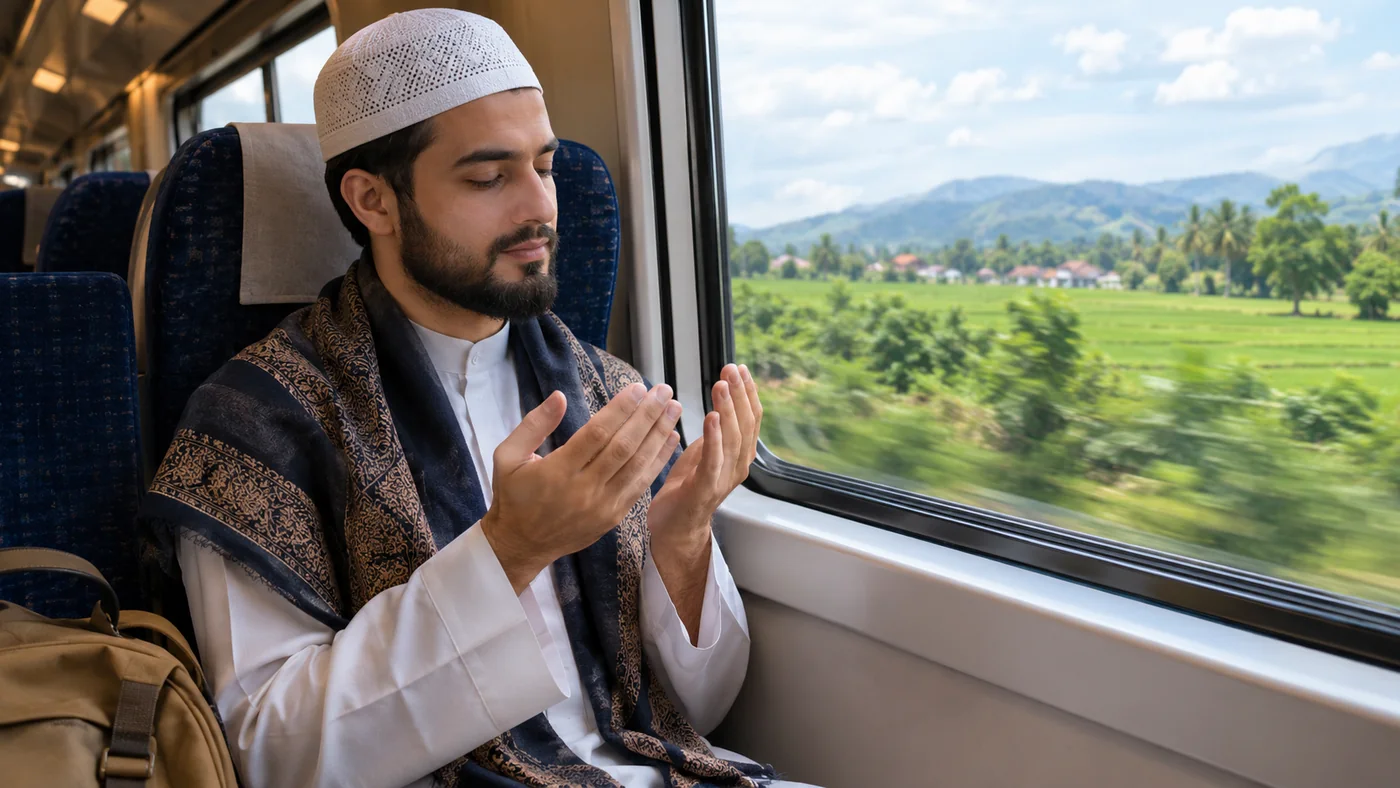
Qur’an 43:13–14 teaches remembrance when transport is made available to us and reminds us that we return to our Lord. Sahih Muslim 1342 records a travel supplication that asks for righteousness, piety and ease, and seeks refuge from the hardships of travel. You may also ask Allah in your own words for safety, beneficial travel and a good return.
Make practical arrangements for people in your care
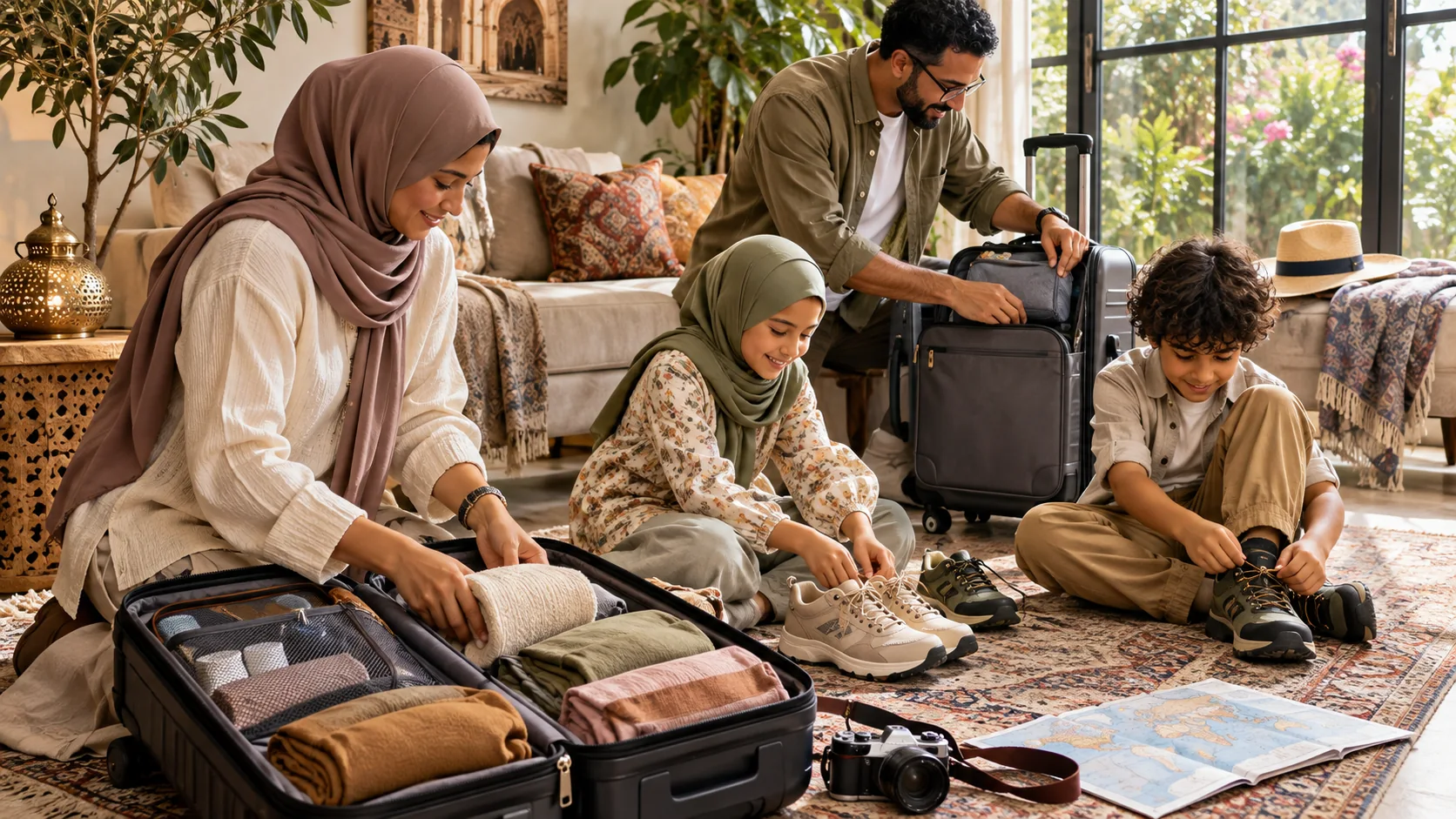
Travel affects the people leaving and those staying behind. Share your itinerary and a way to reach you with family, keep medicines and documents accessible, and agree on a plan for children or anyone needing assistance. These are practical applications of responsibility and care; they should not be presented as a newly prescribed ritual.
Keep patience and consideration in crowded places
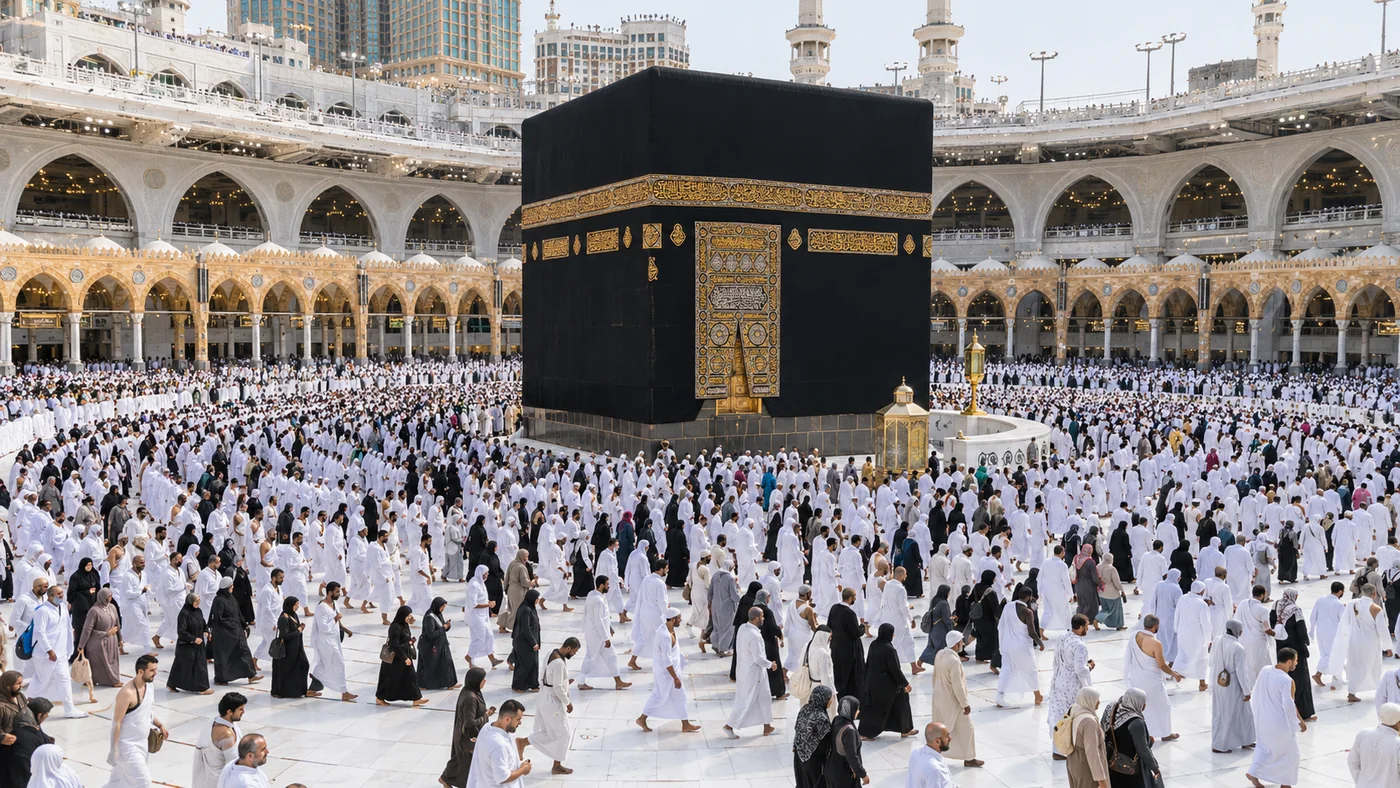
Airports, trains and the Haram bring people together under pressure. Keep walkways clear, give others space, follow staff directions and avoid pushing. In worship areas, make room for people praying and do not raise your voice or block an entrance for a photo. Good character remains part of a Muslim’s conduct while travelling.
Check the evidence behind a claimed Sunnah
Before forwarding an instruction, ask: Is the source a Qur’anic verse, a hadith report, a scholar’s recommendation or a local custom? Has the wording and grading been checked? Are there legitimate differences among schools? Credible Islamic resources cite the original collection and explain where scholars differ. When the matter affects your worship, ask a scholar you trust.
A simple travel-day adab checklist
- Begin with a sound intention and remember Allah in a way supported by reliable sources.
- Keep your promises and communicate delays to anyone waiting for you.
- Share practical details with family who need to know your route and arrival.
- Be patient with queues and avoid taking space from people who need assistance.
- Leave public places clean and follow local instructions at mosques and stations.
- When you return, thank those who supported the journey and reconnect with family.
These are broad applications of good character. They are not a list of newly prescribed ritual steps. For specific rulings—such as prayer concessions while travelling—consult a qualified scholar and the school you follow.
When plans change
Delays, missed connections and room changes can test anyone’s patience. Keep supplier and airline contact details accessible, document changes, ask for clear information and treat other travellers and staff fairly. If a contractual travel issue arises, separate the practical complaint from a religious ruling and seek the right specialist for each.
Good manners include practical responsibility
Islamic etiquette is not limited to a phrase recited at departure. It can shape how you travel: choose an honest booking, read the conditions, protect other people’s documents, do not waste food and respect the staff helping you. If you are the organiser for relatives, explain the plan clearly and do not leave a vulnerable traveller to manage alone.
Some questions associated with travel—such as when a journey qualifies for shortening prayer, whether combining is allowed, or what counts as travel—have detailed scholarly discussions. Those rulings depend on the school and circumstances. This article does not provide a blanket answer; ask an appropriately qualified scholar for your actual itinerary.
When sharing advice with others, separate a reliable text from your own practical suggestion. For example, “keep your passport in your cabin bag” is sensible travel advice; it is not a prophetic instruction. Clear labels protect readers from confusing helpful customs with acts of worship.
Frequently asked questions
Is every good travel habit a Sunnah?
No. Some habits are sound practical advice or good manners without being a specific prophetic instruction. Keep those categories distinct.
Can I shorten prayers whenever I leave home?
Prayer concessions involve detailed rules about distance, duration, intention and jurisprudential school. This article does not set a universal threshold; ask a qualified scholar about your itinerary.
Is there one exact checklist for Islamic travel?
No. The sources offer guidance and supplications, while practical needs differ by destination, companions and health. Use reliable references and prepare responsibly.
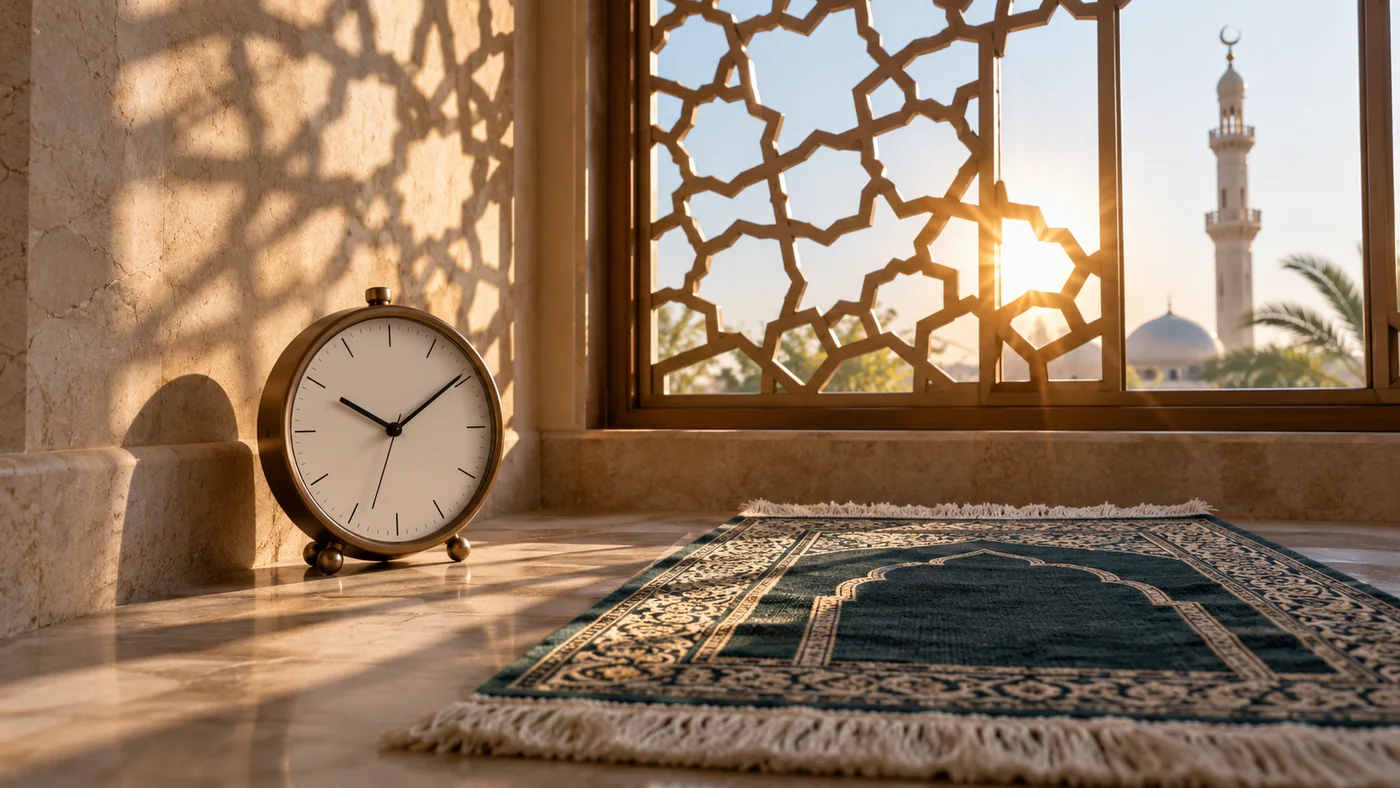
Before leaving, make a realistic plan for prayer times, food, rest and medication. Keep your transport and hotel confirmations accessible and give a trusted person at home your arrival plan. During the journey, be considerate of people with different needs and avoid creating risk by rushing through a station or crowded entrance.
These practical steps support a calm trip, but they are not presented as religious obligations. The goal is to combine remembrance with responsibility, then check specific worship questions with reliable scholarship. Travel can also be an opportunity to practise gratitude: for safe transport, for people who help you and for the ability to visit family or sacred places. The cited Qur’anic and hadith references frame travel as a reason to remember Allah. Your personal reflection may be expressed in your own words, without claiming that an unsourced sentence is a fixed prophetic dua.
Travelling for Umrah
Follow current Saudi instructions, protect your health, respect local rules and prepare for the Miqat and rites using reliable guidance. Our step-by-step Umrah guide, packing list and Madinah visit guide provide practical preparation. For a travel quote, share your dates, departure city and group needs through our enquiry form.

ABOUT THE AUTHOR
Miss Ayesha · Marketing Manager, Al Marifah Travels
Marketing Manager at Al Marifah Travels.
Sources and further reading
- The Holy Qur’an, Az-Zukhruf 43:13–14
- Sahih Muslim 1342 — supplication during travel
- Islamic Etiquettes During Travel — IslamQA
This article is general travel-planning information, not a visa decision, religious ruling or booking confirmation. Verify current requirements for your own circumstances.
Planning a journey? Share your departure city, dates and travel preferences to start an enquiry.
Plan your Umrah