IN THIS ARTICLE
Packing for Umrah is easier when you imagine the journey in stages: leaving home, checking in, boarding, reaching your hotel and walking through a long day in Makkah or Madinah. A useful list protects you from last-minute stress without turning the suitcase into a moving house.
Start with your airline’s ticket and baggage rules, then build the list around the actual trip. Allowances vary by carrier, fare and route, especially when different airlines operate connecting sectors. Check the current rules for your booking instead of using a generic kilogram figure.
Documents and travel admin
- Passport and any visa or entry authorisation required for your nationality and itinerary. Check the official Saudi portal and the exact terms for your travel dates.
- Flight itinerary, hotel confirmation, transfer details and supplier contact numbers.
- Travel insurance details and emergency contacts, if you have arranged cover.
- Copies of essential documents stored separately from the originals; protect personal information and do not share copies casually.
- Prescription medicines in their original packaging, plus any supporting documentation required for the medicine you carry.
Passengers in one family or group may have different passports and entry conditions. Check every traveller individually. An enquiry or package description is not a visa decision or confirmation of entry eligibility.
Clothing, footwear and daily comfort
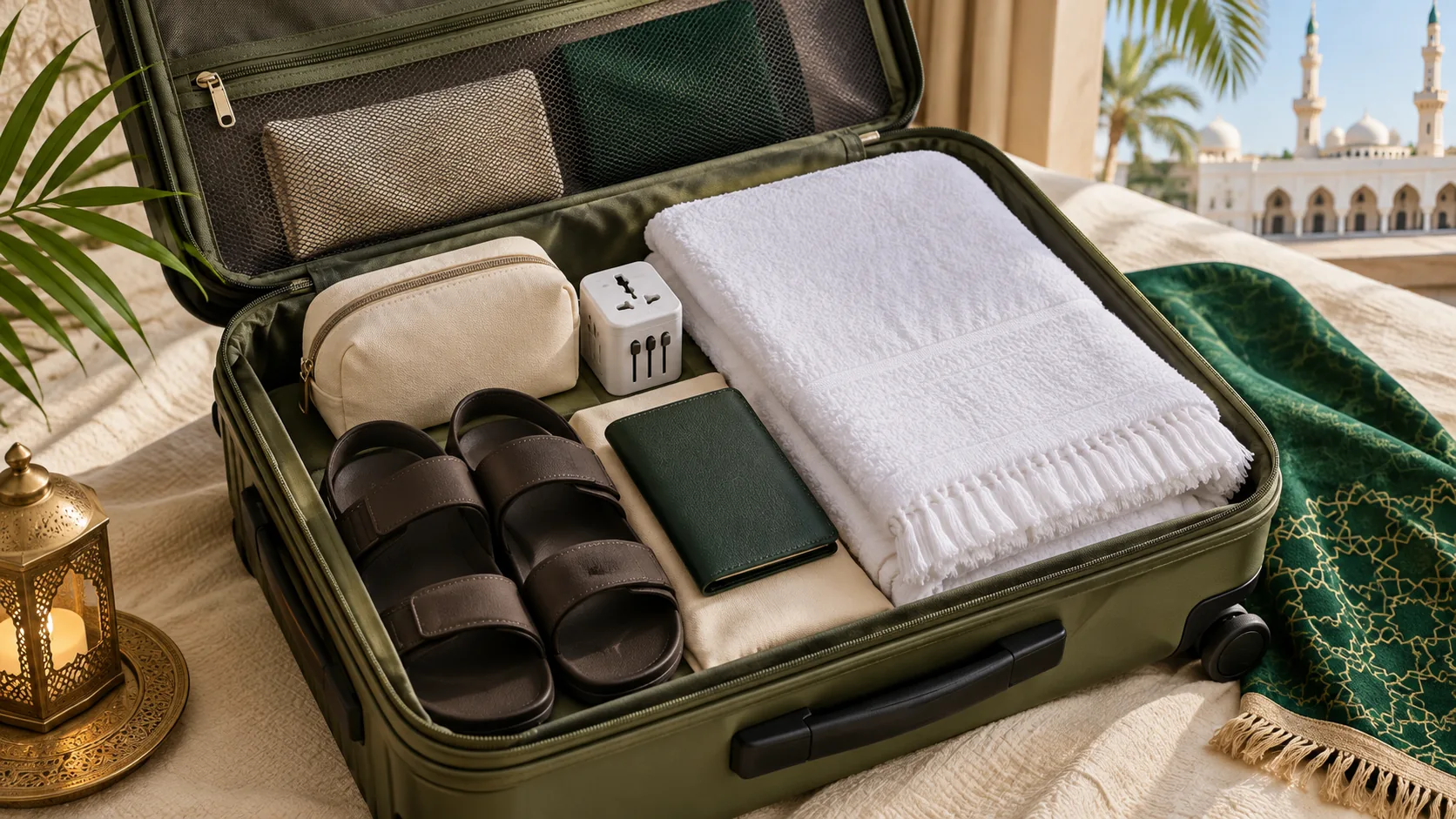
Pack Ihram clothing appropriate to your practice and itinerary, plus a spare if you prefer. Women should bring their usual modest travel clothing and follow a trusted scholar’s advice about dress in Ihram. Add comfortable everyday clothes, sleepwear, undergarments, socks, a light layer for cool indoor spaces and a laundry bag. The amount depends on trip length and whether laundry is available where you stay.
Choose footwear you have already worn in. Bring easy-to-remove shoes for mosque visits and a small shoe bag if it suits you. A blister plaster, basic personal first aid and any prescribed mobility aids can make a difficult day more manageable. Do not buy new shoes at the airport and expect them to feel comfortable immediately.
Keep these essentials accessible
| Put in your cabin bag | Why it helps |
|---|---|
| Passport, travel documents and itinerary | Accessible during check-in, transit and arrival. |
| Essential medication and prescription information | Available if checked baggage is delayed; confirm airline and destination rules for medicines. |
| Phone, charging cable and power bank | Keep contact and digital confirmations available; check the carrier’s power-bank rules. |
| One change of clothing and key Ihram item | A small contingency if the checked suitcase is delayed. |
| Glasses, hearing aids or other daily aids | Keep personal essentials with you, protected in a case. |
Liquid restrictions, permitted battery capacity and cabin baggage size are set by the airline and airport security rules for your route. Check them before packing and keep restricted items out of your cabin bag where required.
Useful personal items
Consider a universal adapter that matches the destination and your devices, unscented toiletries for the Ihram period if needed, sunscreen, a refillable water bottle where permitted, tissues, hand sanitiser, a small cross-body pouch and a compact laundry bag. These are suggestions, not requirements. Check the rules before carrying aerosols, liquids, sharp items or medicines.
Quick checklist to save
- Passport, entry documents and bookings, checked for every traveller.
- Ihram garments or suitable clothing and a small spare in accessible luggage.
- Prescription medicines, supporting documents and daily health aids.
- Comfortable shoes already worn before the trip.
- Phone, cable, power bank within airline rules and an adapter.
- Small personal-care pouch with permitted toiletries.
- Hotel and transport contacts saved offline.
- A copy of baggage rules for each airline and your return itinerary.
Use the list as a prompt, not a universal inventory. Your passport, health needs, airline and length of stay determine what you actually need.
What can stay at home?
Heavy books, multiple pairs of shoes, bulky towels and duplicates of items already supplied by your hotel can add weight. Download maps, booking confirmations and helpful reading before departure in case your connection is unreliable. Keep any religious text exact and sourced; do not rely on unattributed screenshots for ritual instructions.
Pack by bag, not by room
For checked baggage, place clothing, spare footwear, laundry items and permitted toiletries in a way that is easy to find. For cabin baggage, prioritize your documents, medicine, phone and a small contingency. Keep Ihram garments accessible if your route requires you to prepare before the Miqat. The exact airline allowance and security rules decide what may travel in each bag; never assume a product is allowed because another traveller carried it before.
If two airlines are on one itinerary, check both carriers’ rules and confirm whether the bags are checked through to the final airport. If you have a self-transfer, allow for collecting and rechecking bags, and confirm whether the transit country requires any entry permission for your passport.
Build a small personal-care kit
Use a separate pouch for toothbrush, prescribed skin care, any unscented product you need during Ihram, tissues and hand hygiene. Label personal medicines and keep them away from liquids that could leak. If you have a condition requiring temperature control or medical equipment, confirm storage and airline requirements ahead of time rather than improvising at the airport.
Travelling with family or a group
Give each adult a responsibility such as holding the shared itinerary or checking that everyone has water and medication. Children can carry a card with a trusted contact number if appropriate. Keep a spare set of essential items in a second bag where possible, but do not divide medicines in a way that leaves the person who needs them without access. For older relatives, consider walking aids, spare glasses and a light layer for air-conditioned spaces.
Before closing your suitcase, take a photo of the bag and note its description. Keep that information with your baggage tag details in case you need to report a delay.
A final packing check
- Weigh and measure bags against your exact flight allowance.
- Check each connecting airline’s rules, not only the first flight.
- Keep medicines and documents in your cabin bag.
- Label bags with contact information while limiting exposed personal details.
- Leave room for the return trip and any permitted purchases.
For more preparation, see our Umrah planning checklist, UK airport and flight guide and flight and baggage checklist.

ABOUT THE AUTHOR
Miss Ayesha · Marketing Manager, Al Marifah Travels
Marketing Manager at Al Marifah Travels.
Sources and further reading
- Saudi Ministry of Hajj and Umrah — Umrah and Visit Guide
- Saudi official visa portal
- UK Civil Aviation Authority — passenger guidance
This article is general travel-planning information, not a visa decision, religious ruling or booking confirmation. Verify current requirements for your own circumstances.
Planning a journey? Share your departure city, dates and travel preferences to start an enquiry.
Plan your Umrah