IN THIS ARTICLE
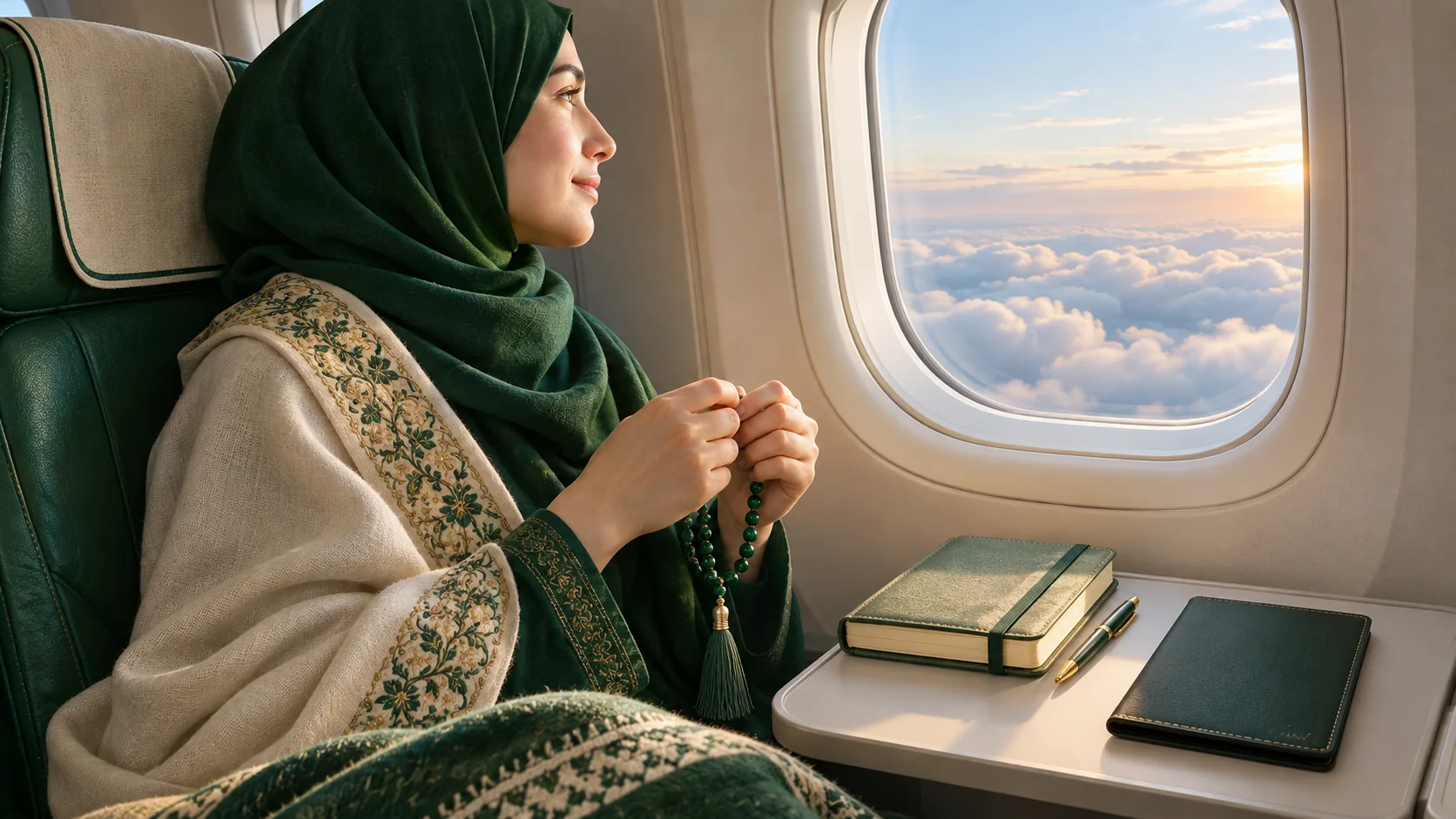
A journey begins before the plane leaves the runway. Many Muslims like to remember Allah as they set out, but online images often mix Qur’anic verses, hadith wording and personal duas without saying which is which. This guide gives references so you can check the source and follow the wording you trust.
Islamic sources preserve supplications for travel and remembrance of Allah. The text below distinguishes Qur’anic wording from a hadith report. Transliterations can vary because Arabic sounds are represented differently in Latin letters; use a trusted reciter or Arabic text when pronunciation matters.
The Qur’anic remembrance when boarding transport
Qur’an 43:13–14 mentions saying words that mean: “Glory be to the One who has subjected this for us, and we could not have done so ourselves; and indeed, to our Lord we will return.” The verse connects travel with gratitude and the return to Allah. Read the full Arabic and translation in a reliable Qur’an edition.
Reference: Surah Az-Zukhruf, 43:13–14. This is Qur’anic text, not a travel-agent phrase or a special prayer invented for air travel.
A supplication reported in Sahih Muslim
In Sahih Muslim 1342, the Prophet ﷺ is reported to have sought righteousness and piety during the journey, asked Allah to make the travel easy, and sought protection from the hardships of travel and a sorrowful return. The narration also includes remembrance that Allah is the companion on the journey and caretaker of the family left behind.
Check the full Arabic, transliteration and translation in the hadith collection. This article summarizes the meaning rather than reconstructing a long transliteration from memory.
When can a traveller make dua?
You can make personal supplication in your own words throughout the journey. The sources above do not restrict dua to one exact moment, one language or an aircraft cabin. Ask a qualified scholar if you want guidance about a particular supplication’s grading or a practice attributed to the Prophet ﷺ.
Keep the wording and the source together
A practical habit is to save a short note with the supplication’s Arabic, a checked transliteration, a translation and its reference. That makes it easier to identify whether a popular version is a Qur’anic verse, a hadith, a scholar’s paraphrase or a personal dua. Transliteration systems are not identical, so small spelling differences do not automatically mean the Arabic is different; compare with the source text.
If you share a dua with family before travel, include the reference rather than an image alone. Avoid claims that reciting a specific wording guarantees a particular flight outcome or protects someone from every hardship. The cited supplications are acts of remembrance and request, not a commercial promise.
How to verify a travel dua shared online
- Look for a named source, such as a Qur’an verse or hadith collection and number.
- Check whether the text is quoted, summarized or translated.
- Compare the Arabic with a reliable edition if you plan to recite exact Arabic wording.
- Check grading and scholarly commentary before describing a report as authentic.
- Do not forward an image claiming a guaranteed outcome unless the claim has reliable evidence.
What the two references contribute
The Qur’anic verse is part of a passage about Allah’s signs and human return. It gives a believer a way to express gratitude for a means of travel without treating the vehicle itself as a source of safety. The narration in Sahih Muslim adds requests for good conduct, piety and ease, and recognizes the family left at home. Together, they shape a balanced mindset: take practical precautions and rely upon Allah.
For reading aloud, choose a reliable printed or digital edition with a clear recitation. If you are unfamiliar with Arabic, start by understanding the translation and learn pronunciation from a teacher or verified recitation. Do not feel that your dua is invalid because your transliteration differs from a social media graphic.
You may make additional personal duas for a safe journey, beneficial knowledge, worship accepted and a safe return. Label these as your own requests rather than attributing them to a specific hadith.
Frequently asked questions
Should I say the travel dua only on a plane?
The Qur’anic remembrance concerns transport and travel, not one aircraft model. Muslim narrations describe travel supplication when setting out. Follow the source and the guidance you trust.
Do I need to say the Arabic perfectly?
Learn the Arabic from a reliable recitation if you can. Translations and personal supplication can help you understand the meaning; ask a scholar if you need a ruling about a specific wording.
Is there a dua guaranteed to prevent delays?
No source cited here promises that a supplication guarantees a particular travel outcome. Make dua while also taking practical steps such as checking your itinerary and allowing connection time.
For Arabic learners, a trusted audio recitation is often more useful than memorizing a phonetic spelling from a graphic. Listen slowly, repeat the words and check the text against a reliable source. A transliteration can be a bridge to the Arabic; it is not the source text itself.
Keep your travel note simple: source reference, meaning and a link to the full text. This is easier to verify and share than a long screenshot collection. There are also supplications for returning from a journey in the hadith collections. If you want to include one, look it up in the original collection with its reference, rather than copying a cropped graphic whose wording or attribution cannot be checked. The same rule applies to duas for entering a town, stopping during travel or bidding farewell.
A note for Umrah travellers
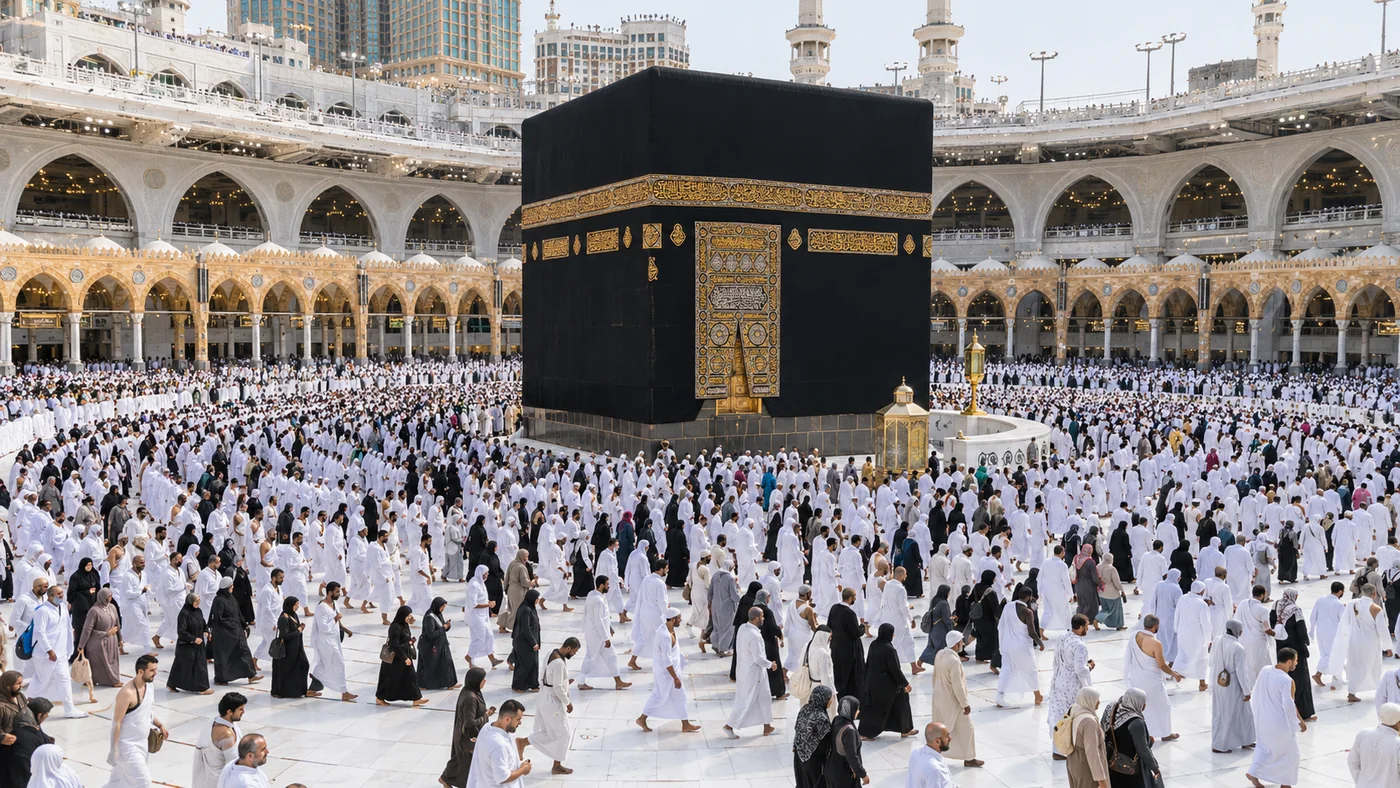
A travel dua is separate from the rites of Umrah. Ihram, Tawaf, Sa’i and completing the hair-cutting step have their own guidance. Do not label a popular supplication as compulsory at a specific circuit unless a reliable scholar confirms that ruling.
Read our Umrah rites guide and Ihram-on-a-plane guide before travelling, and keep official Saudi information saved for your dates.

ABOUT THE AUTHOR
Miss Ayesha · Marketing Manager, Al Marifah Travels
Marketing Manager at Al Marifah Travels.
Sources and further reading
- The Holy Qur’an, Az-Zukhruf 43:13–14
- Sahih Muslim 1342 — supplication during travel
- Jami al-Tirmidhi 3439 — travel supplication
This article is general travel-planning information, not a visa decision, religious ruling or booking confirmation. Verify current requirements for your own circumstances.
Planning a journey? Share your departure city, dates and travel preferences to start an enquiry.
Plan your Umrah