IN THIS ARTICLE
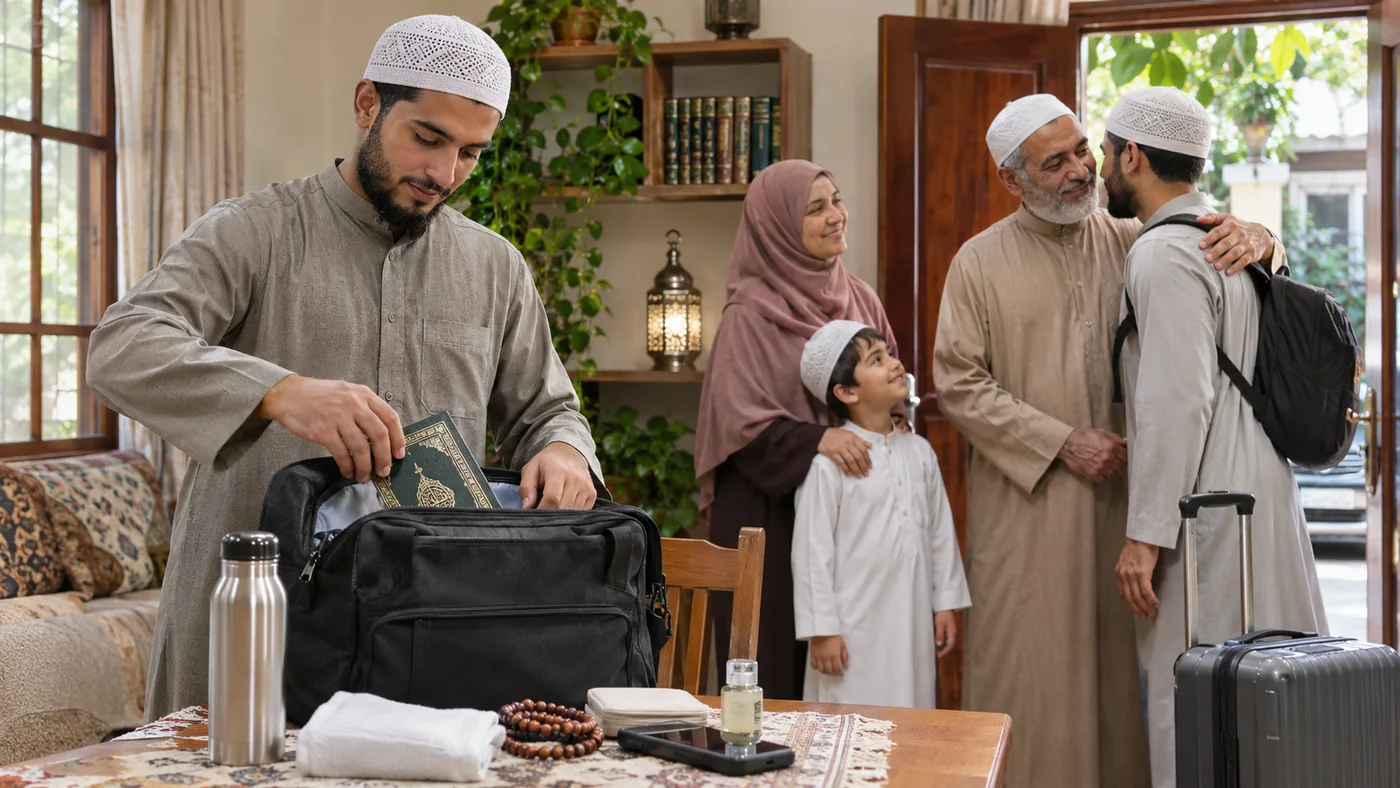
A first Umrah can feel like a thousand small questions wrapped around one deeply meaningful journey. What happens first? How many circuits are there? What if the Haram is crowded? This guide gives you the main sequence and points you to official instructions for the details you should learn before travelling.
- PrepareLearn the route and guidance that applies to you.
- Enter IhramBefore the Miqat relevant to your route.
- Intention & TalbiyahFollow the guidance you have learned.
- TawafSeven circuits around the Kaaba.
- Sa’iSeven one-way passages, ending at Marwah.
- Hair cuttingComplete Umrah as applicable.
This simplified overview is a reading aid, not a substitute for the detailed guidance or scholarly advice in the article.
Umrah is not a race through a checklist. The rites have a sequence, but a pilgrim’s pace, route and circumstances can differ. Use this article to understand the broad order, then use the Ministry of Hajj and Umrah’s current guide and a trusted scholar for the instructions that apply to you.
THE MAIN SEQUENCE
Ihram → Tawaf → Sa’i → hair cutting or shaving. Preparation helps you travel calmly; it is not itself a rite. Personal circumstances and some details should be checked with a qualified scholar.
1. Prepare before reaching the Miqat
Before travel, confirm your route and the Miqat that applies to it. If you are flying toward Jeddah intending Umrah, the applicable Miqat may be crossed in the air. The official Ministry guide explains route-based Miqat points and the need to enter Ihram by the relevant point. Wear the garments or clothing suitable to your practice in advance if that helps you prepare, but remember that changing clothes and entering the state of Ihram are distinct matters.
Learn the intention and Talbiyah from a reliable teacher before departure. Keep the essentials accessible, and ask your airline whether it normally makes a Miqat announcement; do not rely on a fixed number of minutes before landing.

2. Enter Ihram and begin the Talbiyah
At the correct point for your route, make the intention for Umrah and begin the Talbiyah according to the guidance you follow. Ihram is a sacred state with conduct and restrictions. If you have a health issue, are travelling with a group, or are unsure about the details, ask a qualified scholar before setting out rather than trying to resolve it under pressure onboard.
3. Perform Tawaf
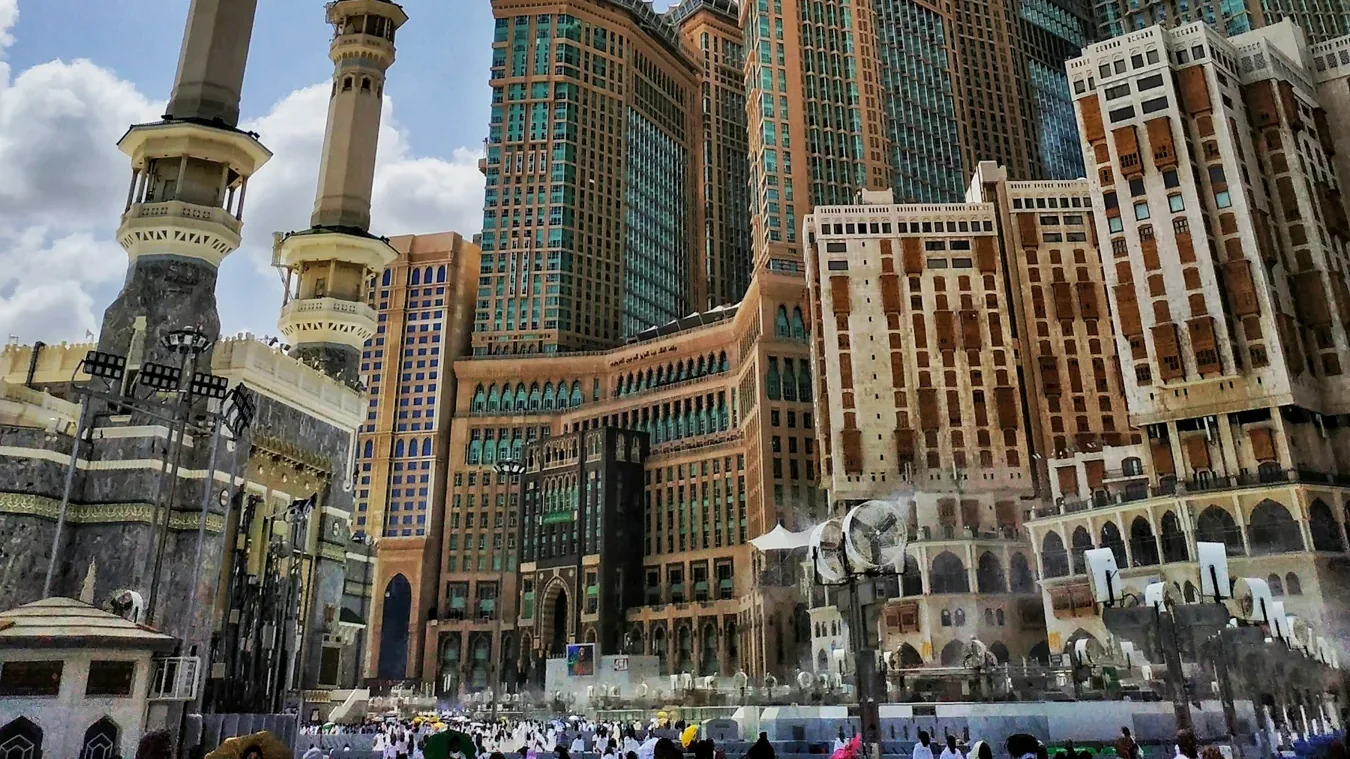
When you reach the Masjid al-Haram, follow the current signs and crowd instructions. Tawaf consists of seven circuits around the Kaaba, beginning and ending at the Black Stone alignment, with the Kaaba on your left. If the area is crowded, avoid pushing or trying to reach the Black Stone at another person’s expense. A gesture from a distance is sufficient for those who cannot approach safely, according to the official guide.
Make remembrance and supplication in words you understand. Do not assume that a different fixed dua is required for every circuit unless a trusted scholar has advised you otherwise. Keep together with your group and agree on a meeting point outside the moving crowd.
4. Pray and move to Sa’i
After Tawaf, follow the mosque’s directional signs and the movement of people. The Ministry guide advises pilgrims to move with the flow and not against it. Pray two units where it is practical and permitted; do not block a route or force a position if the area is busy. Follow current directions for Zamzam access and the Sa’i route.
5. Complete Sa’i between Safa and Marwah
Sa’i is seven one-way passages, beginning at Safa and ending at Marwah. The walk from Safa to Marwah is one passage; returning is the second. The Qur’an names Safa and Marwah among the symbols of Allah (Qur’an 2:158). Men’s brisk walk between the marked lights is a practice associated with the rite; follow the official signs and do not run if it would inconvenience or endanger others. The Ministry’s guide covers the route and stages.
- 1Safa → Marwah
- 2Marwah → Safa
- 3Safa → Marwah
- 4Marwah → Safa
- 5Safa → Marwah
- 6Marwah → Safa
- 7Safa → Marwah
This visual shows the count and direction only; follow live signs and staff instructions on site.
6. Shorten or shave the hair to complete Umrah
After Sa’i, the final hair-cutting step completes Umrah and ends the state of Ihram. The official Nusuk guide describes shaving or shortening for men and shortening for women. Ask a qualified guide if you are uncertain about how much to cut or about your personal circumstances.
What the rites are—and what is preparation
Preparation helps you take part calmly, but it is not the same as a rite. Booking a hotel, taking a shower, wearing the garments, travelling to the Haram and making a list of duas are practical or recommended preparations depending on the guidance followed. The actual sequence described by the Ministry is Ihram, Tawaf, Sa’i and hair-cutting. Learn which acts are essential and which are recommended from a qualified teacher, especially if illness, menstruation, medication or a route change affects your plan.
For a group, designate one person to carry the contact details and agree on a simple regrouping location. Do not rely on everyone’s mobile data working inside crowded areas. If a member needs mobility support, check current access routes before the visit and allow them to complete the rite at a safe pace.
Keep the seven counts clear. In Tawaf, count each circuit around the Kaaba; in Sa’i, count each one-way walk between Safa and Marwah. The Ministry guide explains that the seventh Sa’i ends at Marwah. If you lose count, step aside safely if possible and ask a trusted group leader or scholar how to proceed. Do not stop in a narrow flow of people to debate the count.
Prepare for sensory overload. The Haram can be crowded, loud and physically demanding. Agree on what to do if someone is separated, keep children close, and do not make a group member hurry to match a faster pace. A calm plan helps people focus on worship.
Plan for the real conditions of the day
- Check official information close to your travel date; services and crowd arrangements can change.
- Wear comfortable footwear for walking outside the rites and keep medication with you.
- Use official signs, staff directions and accessible routes; allow extra time for older travellers and children.
- Keep your phone charged and choose a meeting point away from the busiest entrances.
- Do not treat any online summary as a personal fatwa. Scholarly details can differ.
Common questions
How long does Umrah take?
There is no single reliable duration. Crowd density, prayer times, mobility, route conditions and the time taken for each rite all affect the visit. Leave room in your plan rather than promising a fixed finish time.
Are special duas required for each Tawaf round?
Use authentic supplications and remembrance, and ask a scholar about specific devotional practices. The Ministry guide provides the ritual sequence; pilgrims should avoid presenting unsourced phrases as required.
Can I follow this guide instead of a scholar?
This is a travel-oriented overview, not a ruling for every circumstance. Learn the details from an appropriately qualified scholar and check official Saudi guidance for operational arrangements.
Continue preparing
Read our guide to Ihram on a plane, compare Umrah package options, or send a personalised Umrah enquiry.
ABOUT THE AUTHOR
Miss Ayesha · Marketing Manager, Al Marifah Travels
Marketing Manager at Al Marifah Travels.
Sources and further reading
- Nusuk — Umrah Journey and rites
- Saudi Ministry of Hajj and Umrah — Umrah and Visit Guide (PDF)
- The Holy Qur’an, Al-Baqarah 2:158
This article is general travel-planning information, not a visa decision, religious ruling or booking confirmation. Verify current requirements for your own circumstances.
Planning a journey? Share your departure city, dates and travel preferences to start an enquiry.
Plan your Umrah