
IN THIS ARTICLE
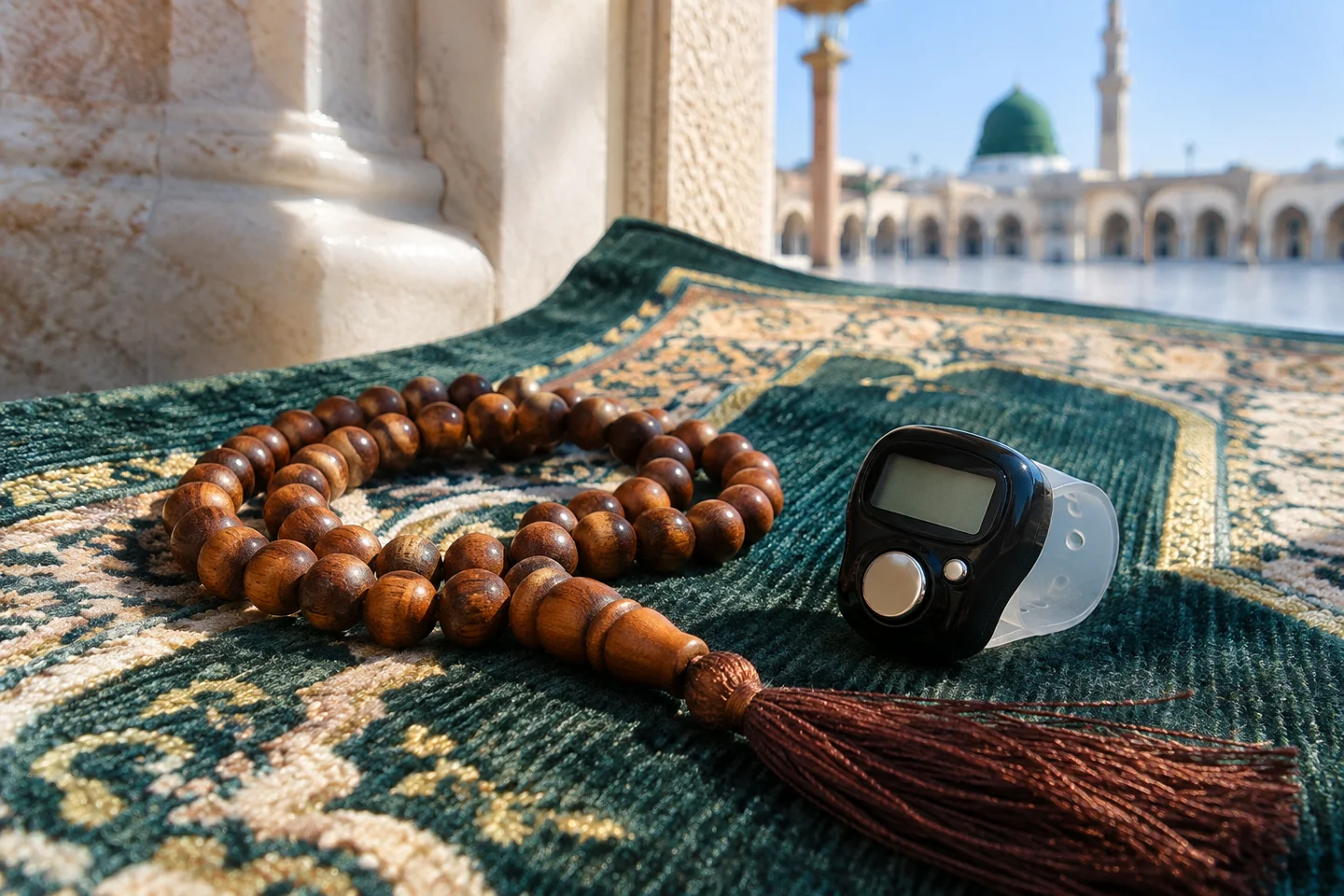
Some people keep track of dhikr with their fingers, prayer beads or a counter. A digital Tasbeeh can help with counting, but the screen itself cannot tell you which words or number are established for a particular situation. Keep the tool in its proper role: a simple aid for your own practice.
Let the counter track; choose your own practice
A digital counter can keep a running number for a phrase you choose. Some counters also let you set a target. That target is a personal setting, not evidence that a particular wording or count is prescribed. If you are following a sourced dhikr for a specific time, use the reference and context supplied by a reliable source.
Check the source of a supplication
Before repeating or sharing a dua from a post or app, check whether it is a Qur’anic verse or a hadith supplication, then check the cited reference and any authenticity grading. Transliterations are only a reading aid and may not capture every Arabic sound. For precise recitation, learn the wording from a trusted teacher or recording.
Keep the habit comfortable and focused
You can keep the counter open while reciting, use it to correct an accidental tap, or leave the phrase field blank if you do not want to save wording. Avoid turning a personal tally into a claim about another person’s worship. If you have a religious question about a specific count or practice, ask a qualified scholar.
Use the Digital Tasbeeh Counter to record repetitions, and browse the Daily Duas collection for supplications with source references and context. You can also read the Quran online. This practical guide is not a fatwa.
ABOUT THE AUTHOR
Miss Ayesha · Marketing Manager, Al Marifah Travels
Marketing Manager at Al Marifah Travels.
Sources and further reading
This article is general travel-planning information, not a visa decision, religious ruling or booking confirmation. Verify current requirements for your own circumstances.
Planning a journey? Share your departure city, dates and travel preferences to start an enquiry.
Plan your Umrah